PayPal business account vs personal
In today’s fast-paced digital world, PayPal stands out as one of the most trusted online payment systems globally. Whether you’re a freelancer, small business owner, or casual online shopper, understanding the PayPal business account vs personal distinction is crucial for managing your money effectively.
The rise of e-commerce and remote work has made digital payments not just convenient but essential. Choosing the right PayPal account type can determine how smoothly your transactions run and how credible your financial operations appear to clients and partners.
If you’re still unsure which account suits your goals, this comprehensive guide will walk you through every key difference, from fees and features to usage limits and professional advantages.
For a complete breakdown of PayPal account types and their features, you can explore this detailed comparison of PayPal accounts, which clearly outlines the benefits of each option.



PayPal Business Account vs Personal: What’s the Real Difference?
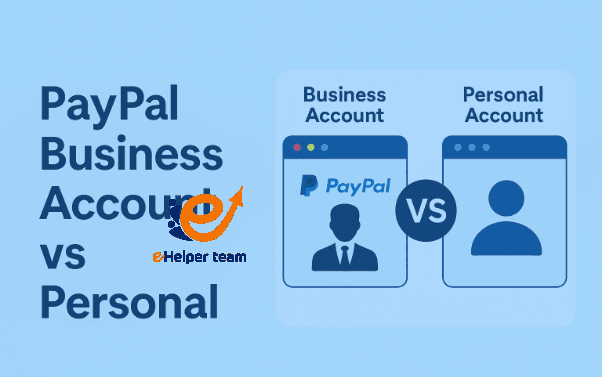
The fundamental difference between a PayPal business account vs personal lies in purpose and control. A personal PayPal account is designed for individuals who use the platform to send or receive money among friends and family, make online purchases, or casually sell personal items.
A business PayPal account, on the other hand, is built for professionals — freelancers, entrepreneurs, and registered businesses that want to receive payments under a company name, issue invoices, and access advanced payment tools, clearly distinguishing it in the PayPal business account vs personal comparison.
Here’s a quick comparison:
| Feature | Personal PayPal Account | Business PayPal Account |
|---|---|---|
| Purpose | Individual use (friends, family, shopping) | Business use (sales, services, invoices) |
| Account Name | Uses your real name | Displays business or brand name |
| Tools Available | Basic money transfers | Invoicing, payment buttons, recurring billing |
| Fees | None for personal transfers | Transaction fees apply for sales |
| Customer Support | General support | Dedicated merchant support |
For individuals who make occasional payments or sell casually, a personal PayPal account offers simplicity and low maintenance. However, anyone aiming to build a professional reputation, accept client payments globally, or integrate PayPal into a website will benefit from a business PayPal account.
In simple terms, personal accounts are for convenience, while business accounts are for growth.
When You Should Use a Personal PayPal Account
A personal PayPal account works best if your activities are limited to personal spending, casual online sales, or sending and receiving funds between people you know. It’s ideal for those who value simplicity and don’t need complex business tools.
Here’s when sticking with a personal account makes sense:
Casual Online Shopping:
If you mainly use PayPal for buying from online marketplaces or subscriptions, the personal account provides a fast, secure way to pay without sharing your card details.Peer-to-Peer Transfers:
For sending or receiving money between friends or family, PayPal Personal is simple and free (if funded from your balance or linked bank).Testing Freelance Payments:
New freelancers who are testing online payments can start with a personal account before upgrading later.Minimal Fees and Simplicity:
Personal accounts are easier to set up, require less verification, and have no monthly maintenance costs.
Still, there are clear limitations. You cannot issue professional invoices under a brand name, access multi-user features, or use PayPal’s merchant protection for sales disputes. Over time, as you start receiving payments from clients or customers, you’ll find that a business account provides better control, credibility, and scalability.
That’s why many freelancers and eCommerce beginners eventually choose to upgrade when their income becomes regular or when they want to separate personal and business transactions.
Why You Might Need a PayPal Business Account
If you’re a freelancer, consultant, agency, or online store owner, a PayPal Business Account opens up a world of tools and benefits designed specifically for professionals.
Unlike the personal version, a business PayPal account allows you to register under your company name, which instantly enhances your credibility with clients and customers. It also enables access to advanced features such as custom invoices, recurring payments, and API integrations that automate the payment process — highlighting one of the main differences in the PayPal business account vs personal comparison.
Here are some compelling reasons to upgrade:
Professional Branding
Instead of displaying your personal name during transactions, you can use your company or brand name. This not only boosts professionalism but also builds customer confidence.Invoicing and Subscriptions
The business account provides the ability to create branded invoices, set up recurring payments, and receive funds in multiple currencies — perfect for global operations.Team Access & Permissions
You can allow your accountant, marketing manager, or sales team to access specific parts of the account securely without sharing your password.Advanced Integrations
Business users can connect PayPal with major platforms like Shopify, WooCommerce, or QuickBooks to automate billing and reporting — a key advantage when comparing a PayPal business account vs a personal setup.
Enhanced Customer Support & Protection
PayPal Business users receive priority support and advanced fraud protection. It’s especially useful for e-commerce merchants dealing with high transaction volumes.Higher Transaction Limits
Business accounts allow greater transaction limits compared to personal ones, offering flexibility for larger transfers or international sales.
If you’re ready to transition into professional payments, check out this guide to setting up a PayPal Business Account that walks you through the steps to open, verify, and configure your account for professional use.
How to Switch or Upgrade from a Personal to a Business PayPal Account
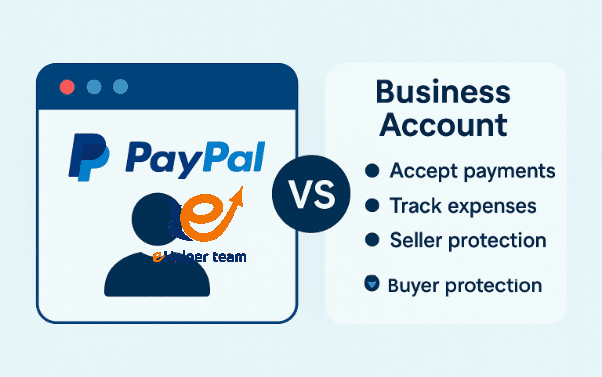
If you’re currently using a personal PayPal account and want to transition into a professional setup, upgrading is a straightforward process. The switch ensures that you retain your existing balance, transaction history, and verification settings — while unlocking business-level tools and branding options that highlight the core advantages of a PayPal business account vs personal structure.
Here’s a step-by-step guide to upgrading:
Log in to your current PayPal account.
Navigate to your account settings and click on the “Account Type” option.Select “Upgrade to Business Account.”
You’ll be asked for your business information — such as company name, business type, and contact details.Add Business Details.
Enter your brand name as you want it to appear on customer receipts and payment confirmations.Verify Your Business Information.
Provide proof of ownership (like a business registration certificate or tax ID) if required.Set Up Your Business Tools.
Once upgraded, you can create payment buttons, invoices, or integrate PayPal with your eCommerce store.
For those looking for a visual, user-friendly guide, you can refer to the full tutorial on upgrading your PayPal account that explains the process and highlights key setup options.
Always separate your business email from your personal one. Using a dedicated business email enhances brand professionalism and simplifies tax documentation later.
PayPal Business Account Fees, Tools, and Security Insights
While PayPal offers free sign-up and basic services, it does charge small fees for certain business transactions. Understanding these costs can help you make better financial decisions.
Here’s an overview of the key PayPal Business fees and tools in 2025:
| Category | Description | Typical Fee |
|---|---|---|
| Domestic Sales | Transactions within the same country | 2.9% + fixed fee |
| International Sales | Cross-border transactions | 4.4% + currency conversion fee |
| Micropayments | Small transactions under $10 | 5% + $0.05 |
| Chargebacks | Refunds or disputes | $20 per case |
| Currency Conversion | Applying exchange rates | 3–4% markup |
Business accounts also grant access to advanced tools such as:
PayPal Checkout for websites
Custom payment buttons for eCommerce stores
API access for automation
Recurring billing and subscriptions
Fraud protection systems
Security is another major advantage. Business accounts use advanced encryption, AI-driven fraud detection, and real-time alerts to secure every transaction.
To understand how PayPal structures its merchant protection and security systems, review this in-depth breakdown of payment gateways that compares PayPal with other major processors like Stripe and Square.
Choosing Between PayPal Business and Personal in 2025: Expert Verdict
By now, it’s clear that both PayPal account types serve specific purposes. The decision between a PayPal business account vs personal depends on your financial goals, income level, and whether you transact for business or personal reasons.
Here’s a concise verdict:
| User Type | Recommended Account | Why |
|---|---|---|
| Casual buyer or sender | Personal Account | Easier, free, and simple |
| Freelancer or online seller | Business Account | Accepts professional payments, invoices |
| eCommerce store owner | Business Account | Integrates with shopping platforms |
| Family & friends only | Personal Account | Zero transaction fees |
| Digital agency or brand | Business Account | Multi-user access, detailed reporting |
So, if your transactions are growing, clients are paying you regularly, or you’re setting up an online shop, switching from a personal account to a PayPal business account vs personal setup is a smart long-term investment. It builds credibility, improves payment tracking, and simplifies financial reporting — essential for growth in 2025.
Frequently Asked Questions (FAQs)
1. What is the main difference between PayPal Business and Personal accounts?
The biggest difference lies in how each account is used. Personal accounts handle everyday payments between individuals, while business accounts are built for companies and freelancers that need invoicing, branding, and professional tools.
2. Can I have both a personal and a business PayPal account?
Yes, you can maintain both — but they must use different email addresses. This helps you separate personal and business finances for better tracking, especially when managing a PayPal business account vs personal setup.
3. Are there fees for personal PayPal accounts?
No fees apply when sending money to friends or family using your balance or linked bank account. However, if you use a credit card or receive business payments, standard fees apply.
4. How much does it cost to open a PayPal Business Account?
Opening and maintaining a PayPal Business Account is free. Fees are only charged when processing transactions or currency conversions.
5. Can I switch from a personal to a business PayPal account without losing my history?
Absolutely. You can upgrade without losing your transaction history, balance, or linked bank accounts.
6. What documents do I need for a business account?
Usually, you’ll need a registered business name, an official email, and sometimes a tax identification number. Verification helps protect both the seller and the buyer.
7. Is a business account more secure than a personal one?
Both accounts use PayPal’s encryption and fraud detection systems. However, business accounts include merchant protection and dispute resolution tools that are better suited for sellers.
8. Can freelancers use a PayPal Business Account?
Yes — in fact, freelancers benefit the most. It lets them accept payments under a professional name, issue invoices, and manage multiple currencies.
9. What are the tax implications of a business PayPal account?
Business accounts are typically linked to tax reporting systems. You’ll receive detailed financial summaries to simplify end-of-year accounting.
10. Which PayPal account type is better for 2025?
For individuals making personal payments, a personal account is perfect. For professionals or anyone earning income online, the PayPal Business Account offers far greater flexibility, professionalism, and financial control.
Final Thoughts
The debate between a PayPal business account vs personal one isn’t about which one is better overall — it’s about which one suits your purpose best.
If your PayPal activity revolves around shopping, family transfers, or small personal sales, stick to the personal account for simplicity.
But if your goals involve brand building, client invoicing, or scaling an online business, upgrading to a PayPal Business Account will future-proof your operations and increase your professional credibility.